

Online retail has shifted permanently. The modern digital shopper no longer tolerates generic storefronts, slow search bars, or disjointed checkout paths. Consumers expect storefronts to predict what they need, offer immediate answers, and deliver fluid experiences regardless of the screen they use.
To keep up, forward-thinking brands are moving away from traditional, rigid site architectures. Instead, they are pairing machine learning algorithms with flexible software foundations to transform standard online stores into automated revenue engines.
- Smarter Discovery: Machine learning decodes shopper intent to surface items buyers actually want, reducing site bounce rates.
- Modular Agility: Decoupled frontends allow brands to deploy new AI features continuously without risking platform downtime.
- Streamlined Fulfillment: Predictive analytics align customer demand with warehouse inventory to keep operating costs lean.
AI-Tailored Shopping Experiences Through Data-Driven Search
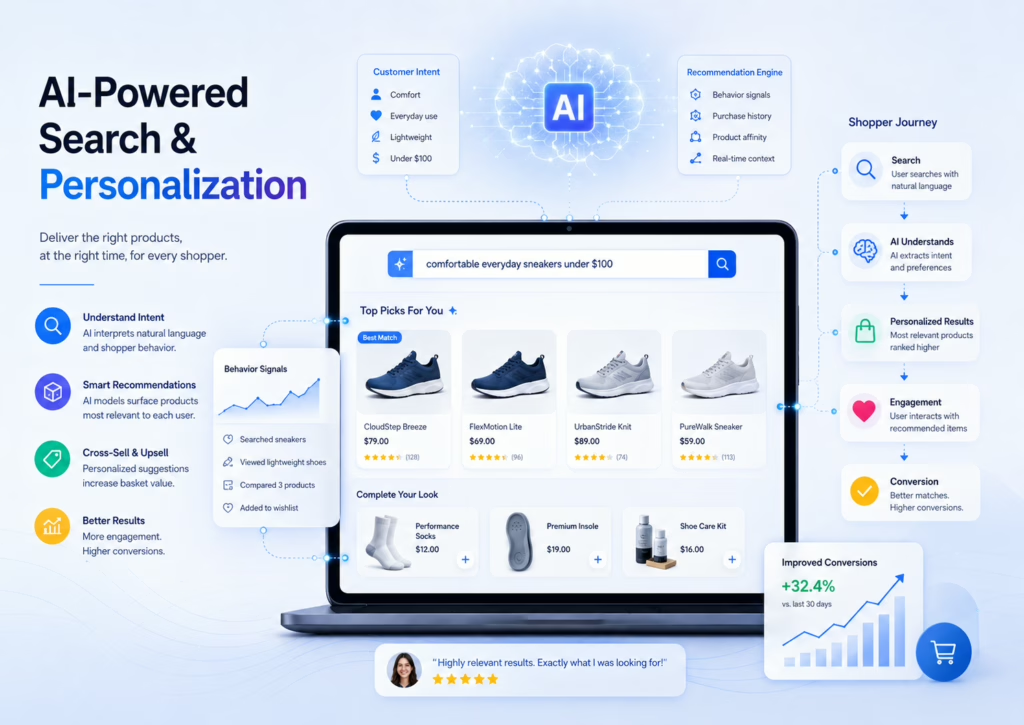
Static catalog browsing is rapidly becoming a thing of the past. Traditional eCommerce platforms relied on historical order data to predict customer preferences, often delivering generic and uninspired shopping experiences. Today, advanced machine learning tools are transforming product discovery by analyzing active browsing behavior, search intent, device types, customer segments, and real-time session signals to deliver faster, more relevant, and deeply personalized search results.
For enterprise merchants, leveraging specialized AI Search Implementation enables platforms to automatically identify product affinities, refine catalog accuracy, and dynamically adjust search results based on buyer behavior. This helps businesses build custom recommendation engines, automated cross-selling workflows, and personalized promotional banners that increase engagement, boost average order value, and directly improve overall conversion rates.
Decoupled Frontends: Giving AI Room to Perform
Deploying complex predictive models across multiple customer touchpoints, web apps, mobile apps, digital kiosks, and smart devices, can cause severe performance bottlenecks on legacy monolithic systems. Heavy code stacks lead to slow page loads, which directly hurt conversion rates.
This structural bottleneck is solved through flexible headless commerce solutions. By separating the frontend user experience from backend database logic via APIs, engineering teams gain total liberty to test custom AI tools without impacting core system stability.
When brands partner with an experienced headless ecommerce development agency, they can connect predictive recommendation pipelines directly into fast Progressive Web Applications (PWAs) or native mobile apps without introducing latency.
Scaling Wholesale with B2B Marketplace Development Services
AI’s ability to drive growth extends heavily into non-consumer markets. Complex business-to-business environments involve tiered accounts, custom pricing agreements, multi-user approval trees, and massive inventory catalogs.
For organizations leveraging comprehensive B2B Marketplace Development Services, integrating machine learning helps simplify these complex purchasing cycles. AI tools can instantly map vendor catalogs, calculate customized dynamic quotes based on contract volume, and automate reorder alerts for corporate accounts.
- Custom Contract Pricing: AI algorithms display dynamic, pre-negotiated price tiers to authenticated business buyers instantly.
- Automated Vendor Onboarding: Vendor portals use machine learning to index product catalogs and sanitize vendor data automatically.
- Bulk Order Assistance: Smart search tools convert unstructured buyer requests or part numbers into instant shopping lists.
Smarter Backend Operations: Dynamic Pricing and Demand Forecasting
AI does far more than tweak customer-facing storefront visuals; it fundamentally transforms backend economics:
- Automated Price Adjustments: Machine learning models track rival price changes, current warehouse volume, and market demand signals to adjust price tags automatically for maximum profitability.
- Predictive Inventory Management: By evaluating seasonal trends alongside purchasing signals, algorithms accurately predict future stock requirements, helping businesses prevent stockouts during sales surges while avoiding overstock holding costs.
Automating these backend logistics protects profit margins while keeping pricing competitive during major shopping events.
Modern Support: Interactive Assistants and Visual Search
Customer service is moving rapidly away from static contact forms and toward proactive visual and conversational support:
- Generative Support Agents: Automated assistants answer order tracking queries, resolve sizing questions, and lead users through product setup using natural language.
- Visual Search Discovery: Buyers can upload a photo or screenshot of an item to instantly locate matching products across a catalog, bypassing keyword searches entirely.
Bringing these capabilities into large-scale platforms requires solid engineering. Working alongside an accredited Adobe Commerce development partner guarantees that external machine learning services integrate securely into core software without creating speed issues.
Key Steps for Building a Scalable AI Strategy
To transform an e-commerce platform into a growth engine, brands should take a practical and realistic approach to tech upgrades. The process starts by auditing data pipelines so machine learning tools can work with clean, accurate user behavioral signals and inventory records. From there, transitioning to a modular, API-first setup gives engineering teams the freedom to test and connect specialized AI services without risking platform downtime. Finally, integrating dedicated B2B Marketplace Development Services helps activate advanced system capabilities, allowing enterprise platforms to deliver intelligent search features, dynamic pricing models, and tailored account experiences that support long-term business expansion.
Conclusion: Building an AI-Ready Commerce Future
Artificial Intelligence is no longer just a trend for tech giants, it has become the baseline for modern digital commerce. By combining smart machine learning algorithms with flexible, decoupled architecture, brands can transform traditional online catalogs into adaptive, revenue-generating ecosystems.
Whether your goal is to deliver hyper-personalized product recommendations, streamline warehouse inventory, or speed up customer service with interactive tools, success comes down to your technical foundation. Investing in robust enterprise engineering and agile headless architectures today ensures your platform stays fast, adaptable, and profitable tomorrow.
Frequently Asked Questions (FAQs)
How does AI directly increase e-commerce conversion rates?
AI increases conversion rates by removing friction from the buyer’s journey. It delivers hyper-relevant search results, dynamic personalized product recommendations, and instant support via AI chatbots, helping shoppers find and purchase products faster.
Why is headless commerce ideal for AI integration?
Headless commerce separates the backend logic from the frontend design. This API-first structure makes it significantly easier to connect specialized AI engines, such as visual search tools or real-time personalization algorithms, to any frontend touchpoint without slowing down site performance.
How can enterprise brands implement AI in Adobe Commerce?
Adobe Commerce features built-in AI capabilities that enable automated site search, live search filters, and personalized product recommendations. Enterprise brands can also work with specialized developers to build custom machine learning models into their checkout and inventory flows.



Snehil Prakash is a growth leader in saas and it industry. He has lead multi million dollar businesses in this space and currently the CEO of Techlithic solutions LLC that owns brands like howtobuysaas, sendwo and work as venture partner for businesses to raise captial or going to the IPO way. Reachout to him to learn more.